Mahatma Gandhi and Prof. Sukhvir Sanghal: A Meeting of Art and Ideals
Exploring Prof. Sukhvir Sanghal’s artistic engagement with Mahatma Gandhi, his admiration for Gandhian philosophy, and the ideals of truth, non-violence and humanism reflected in his life and paintings.
The artistic legacy of Prof. Sukhvir Sanghal (1914–2006) reflects a deep engagement with Indian culture, philosophy and humanistic ideals. Mahatma Gandhi, whose principles of truth, non-violence and compassion deeply influenced the artist, became the subject of a dedicated series of paintings through which Sanghal explored his enduring moral and philosophical legacy.
An Encounter with Gandhi: Art, Patriotism and Purpose
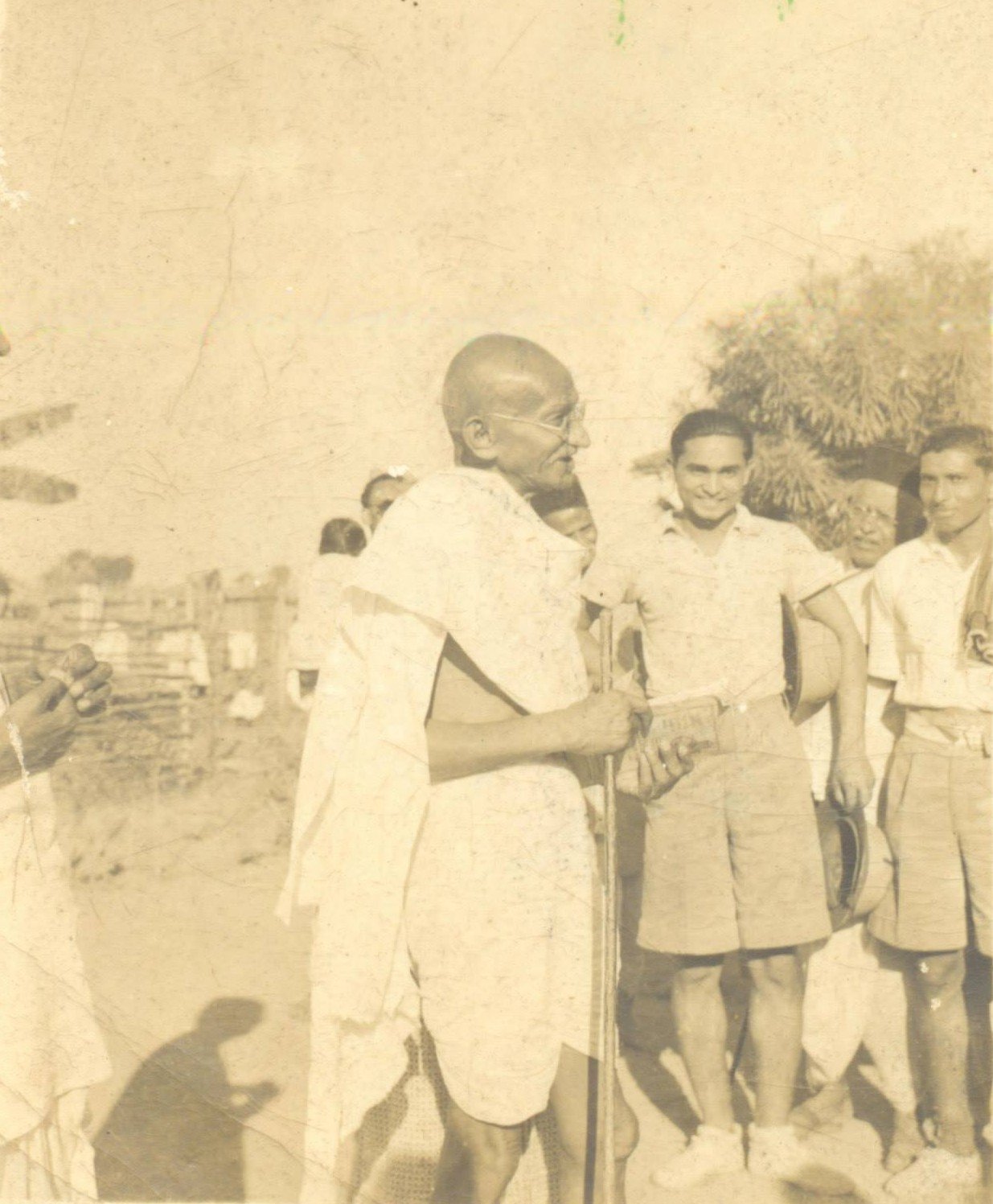
Prof. Sanghal was deeply influenced by Gandhi's principles and actively participated in India's freedom struggle. He was reportedly imprisoned on several occasions during the struggle against British rule.
Inspired by the national movement and Gandhi's leadership, Sanghal expressed his desire to join those directly involved in the freedom struggle.
An interesting anecdote from this period concerns Gandhi's recognition of Sanghal's artistic abilities. Aware of his talent, Gandhi is said to have discouraged him from pursuing direct political involvement, remarking:
Rajneeti tumhare bas ki nahin hai— Politics is not your calling.
According to the account, Gandhi had Sanghal's belongings moved outside when the young artist remained adamant about joining the freedom struggle. This anecdote offers an intriguing glimpse into the interaction between the artist's patriotic aspirations and Gandhi's perception of his creative abilities.
Sanghal's commitment to the nation subsequently found expression through his artistic practice, allowing him to contribute through a different form of service. His admiration for Gandhi was therefore not confined to an artistic subject; it was connected to a wider set of convictions that informed his understanding of society, national identity and the responsibilities of an artist.
The Gandhi Series: Art, Philosophy and Humanism
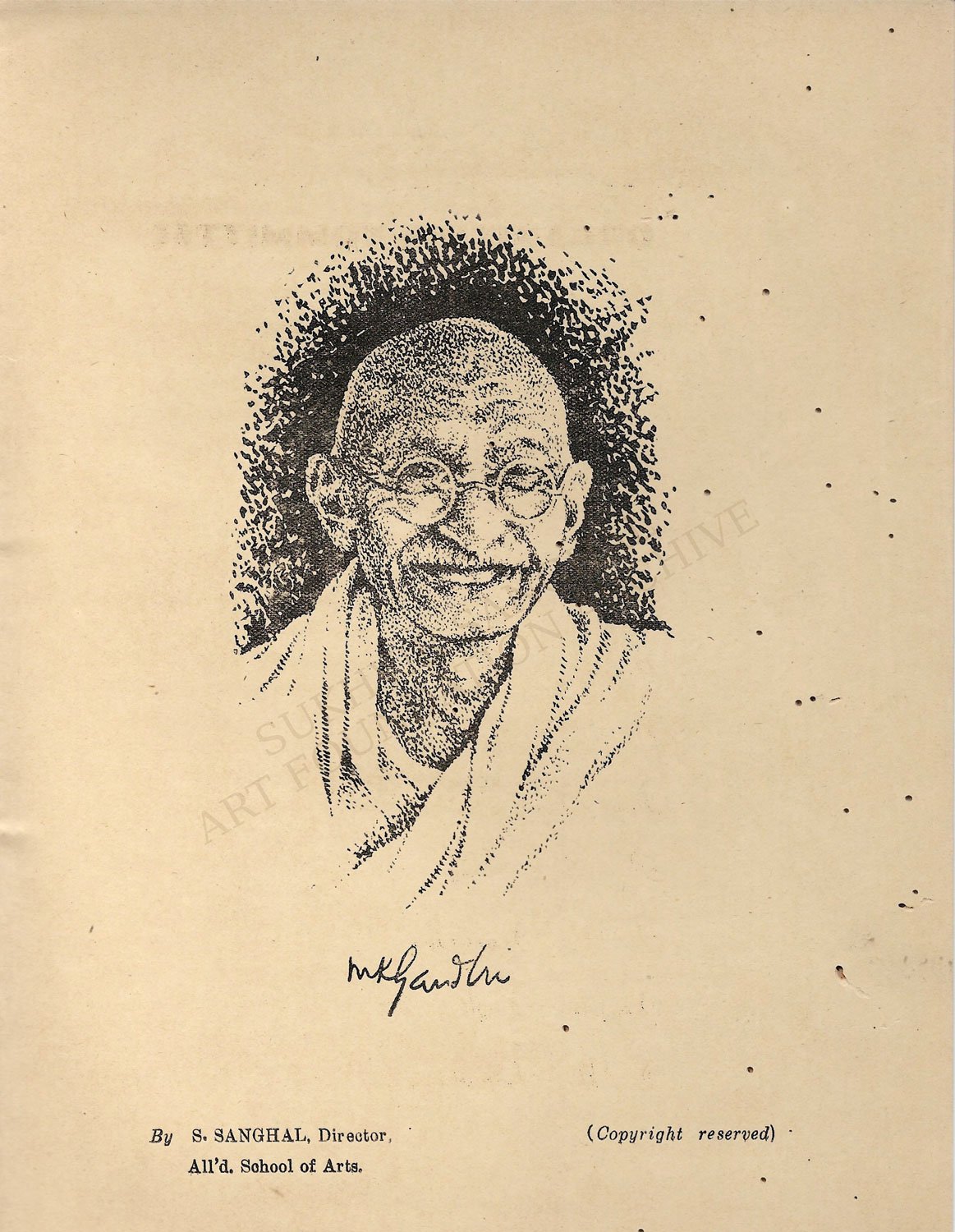
Inspired by Gandhi's life and ideals, Sanghal created an entire series of paintings reflecting the Mahatma's philosophy, leadership and humanistic vision. Five paintings from this series are a part of the collection at Gandhi Bhavan in Lucknow, while the remaining works were preserved in the artist's collection.
Among the notable works are The Great Soul of the Age, Bapu among Harijans and Bapu as Pilot. While The Great Soul of the Age explores Gandhi's universal philosophical and humanistic ideals, Bapu among Harijans addresses the social upliftment of oppressed sections of society who faced discrimination and unequal treatment. Bapu as Pilot symbolically portrays Gandhi's leadership and guidance during India's struggle for independence from British rule. These three works are executed in watercolour wash on paper.
Another distinctive work, Portrait of Gandhi, is created through thread embroidery on khadi cloth, bringing together Gandhi's association with khadi and Sanghal's creative use of an unconventional artistic medium.
Humanism, Nationalism and the Artist's Personal Philosophy
Sanghal's admiration for Gandhi was reflected not only in his paintings but also in his personal values and way of life.
He was regarded as a humanist and follower of Gandhian thought who sought to practise the principles he admired. Khadi clothing held particular significance for him, and he preferred garments made from khadi. These garments are still preserved in his home-turned-museum.
His opposition to discrimination and his belief in the dignity of every individual formed important aspects of his worldview.
These convictions also informed his understanding of art. For Sanghal, painting was not merely an exercise in aesthetic expression or technical accomplishment. It offered a means of communicating ideas, preserving cultural values and encouraging reflection on society and human existence.
His Gandhi series can therefore be understood as an extension of his personal philosophy. Through his artistic engagement with the Mahatma, Sanghal explored ideals that were central to his own understanding of humanity, national identity and social responsibility.
The Historical and Artistic Significance of the Gandhi Series
The Gandhi series forms a significant chapter in Prof. Sukhvir Sanghal's artistic legacy, reflecting his engagement with Mahatma Gandhi, India's freedom struggle, and the enduring ideals of truth, non-violence and human dignity. Through these works, Sanghal interpreted Gandhi's life, philosophy and influence, preserving an artistic perspective on one of the defining periods in India's history.
Conclusion
Prof. Sukhvir Sanghal's artistic engagement with Mahatma Gandhi reflects a profound connection between art, personal conviction and universal human values. Through his Gandhi series, particularly The Great Soul of the Age, Sanghal went beyond depicting a historical leader to explore the ideals that defined Gandhi's life and philosophy.
Drawing upon diverse spiritual and philosophical traditions, Sanghal presented Gandhi as an embodiment of truth, non-violence, compassion and human dignity. His paintings place the Mahatma within a broader humanistic tradition, transcending political and historical boundaries.
The Gandhi series thus stands as both a tribute to one of India's most influential figures and a reflection of Sanghal's own ideals. It demonstrates how art can become a lasting expression of philosophical thought, historical memory and the values that shape humanity.
Research & Compilation