Life & Legacy
A pioneer of Indian wash painting, Prof. Sukhvir Sanghal devoted his life to exploring the emotional and spiritual dimensions of art. Through a unique synthesis of Indian aesthetics, philosophy and artistic innovation, he created a visual language that remains both timeless and deeply relevant. His legacy endures through his paintings, writings, teachings and lasting contribution to the cultural heritage of India.
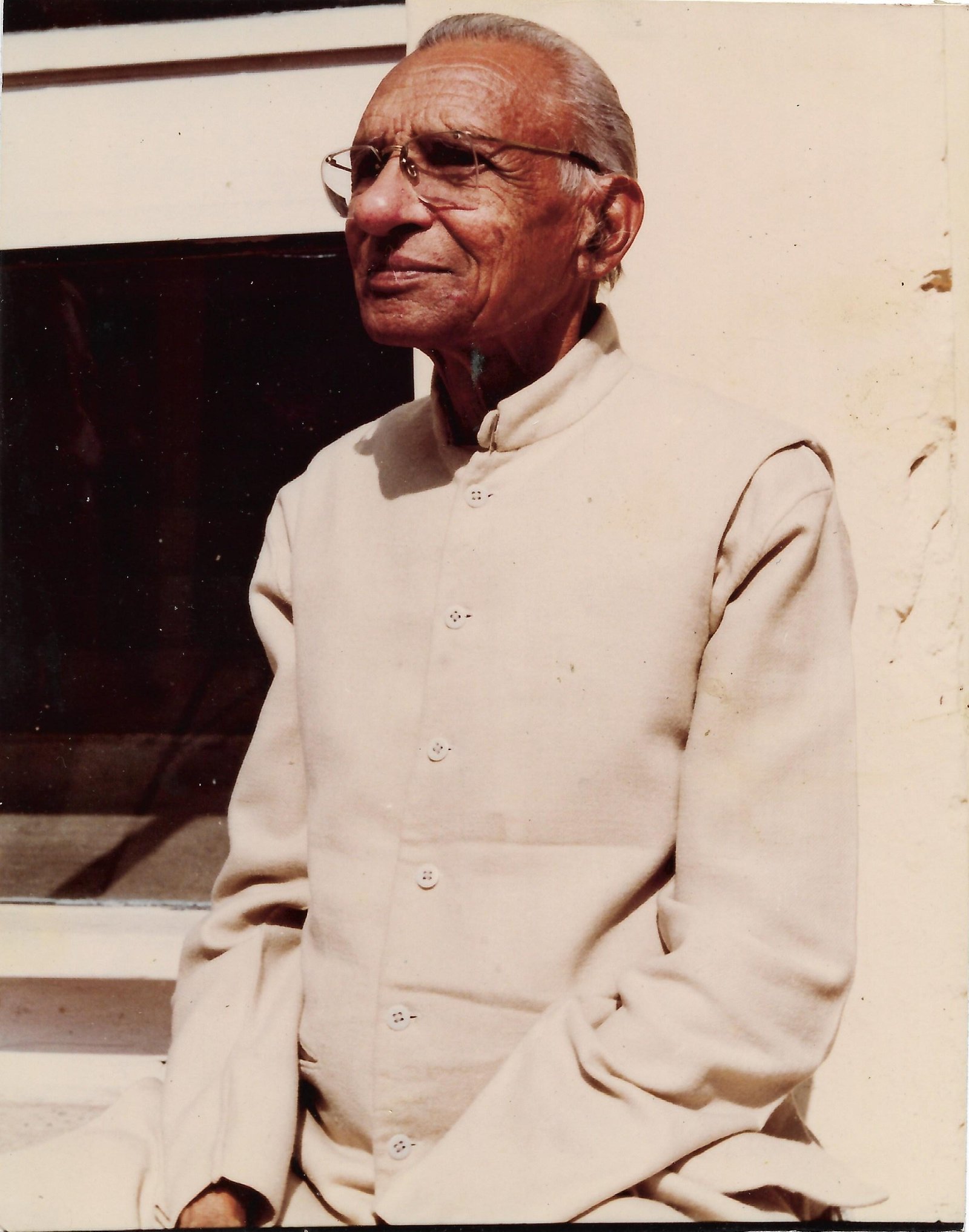
A Life Dedicated to Art
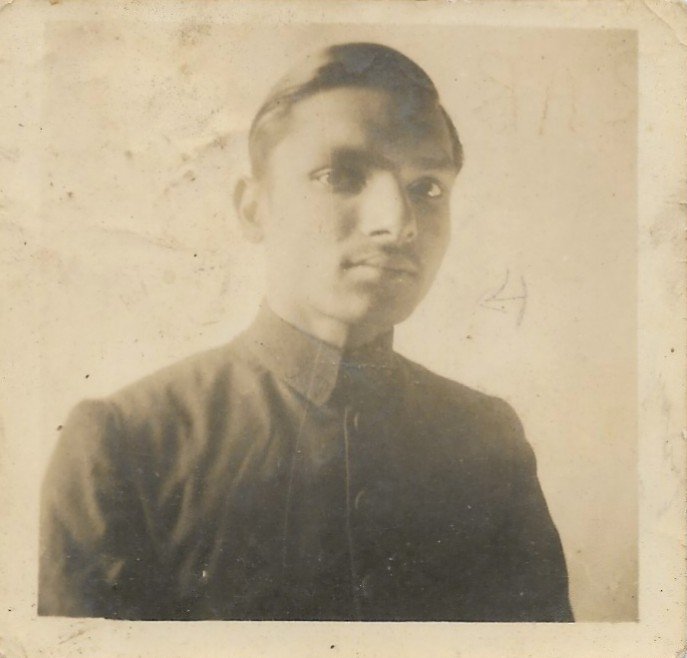
Born on 14 July 1914 in Muzaffarnagar, Uttar Pradesh, Prof. Sukhvir Sanghal displayed a deep fascination with drawing, painting and music from an early age. Although his father envisioned a career in engineering for him, fate would ultimately lead him toward a different path—one that would leave a lasting impact on Indian art.
After completing his High School education from D.A.V. High School, Muzaffarnagar, in 1930, Sanghal initially pursued engineering studies. However, a chance incident during an examination, when an ink pot spilled over his answer sheet, altered the course of his life. At a time when India was in the midst of its struggle for independence, he became actively involved in the Non-Cooperation Movement. His participation led to his arrest, and he was advised to leave his hometown for some time.
The Search for an Indian Aesthetic
It was during this period that destiny intervened once again. In Lucknow, a close friend recognized his exceptional talent and encouraged him to seek formal training in art. Following this advice, Sanghal enrolled at the Lucknow School of Arts, where he completed a five-year Diploma in Fine Arts in 1936.
Yet academic success alone could not satisfy his deeper quest. While he had acquired technical skills and professional training, he remained in search of an authentic artistic language rooted in Indian culture and aesthetics. This pursuit led him to the distinguished artist and educator Asit Kumar Haldar, then Principal of the Lucknow School of Arts and a leading figure associated with the Bengal School tradition. Under Haldar's guidance, Sanghal was introduced to the philosophical and cultural foundations of Indian art—an influence that would profoundly shape his artistic vision and define the course of his life's work.
Beyond Technique: Reimagining Wash Painting
Prof. Sanghal's greatest contribution was not merely technical. He transformed wash painting into a vehicle for emotional, philosophical and spiritual exploration through the Indian concept of Rasa.
His paintings sought to evoke inner experience rather than simply represent external reality.
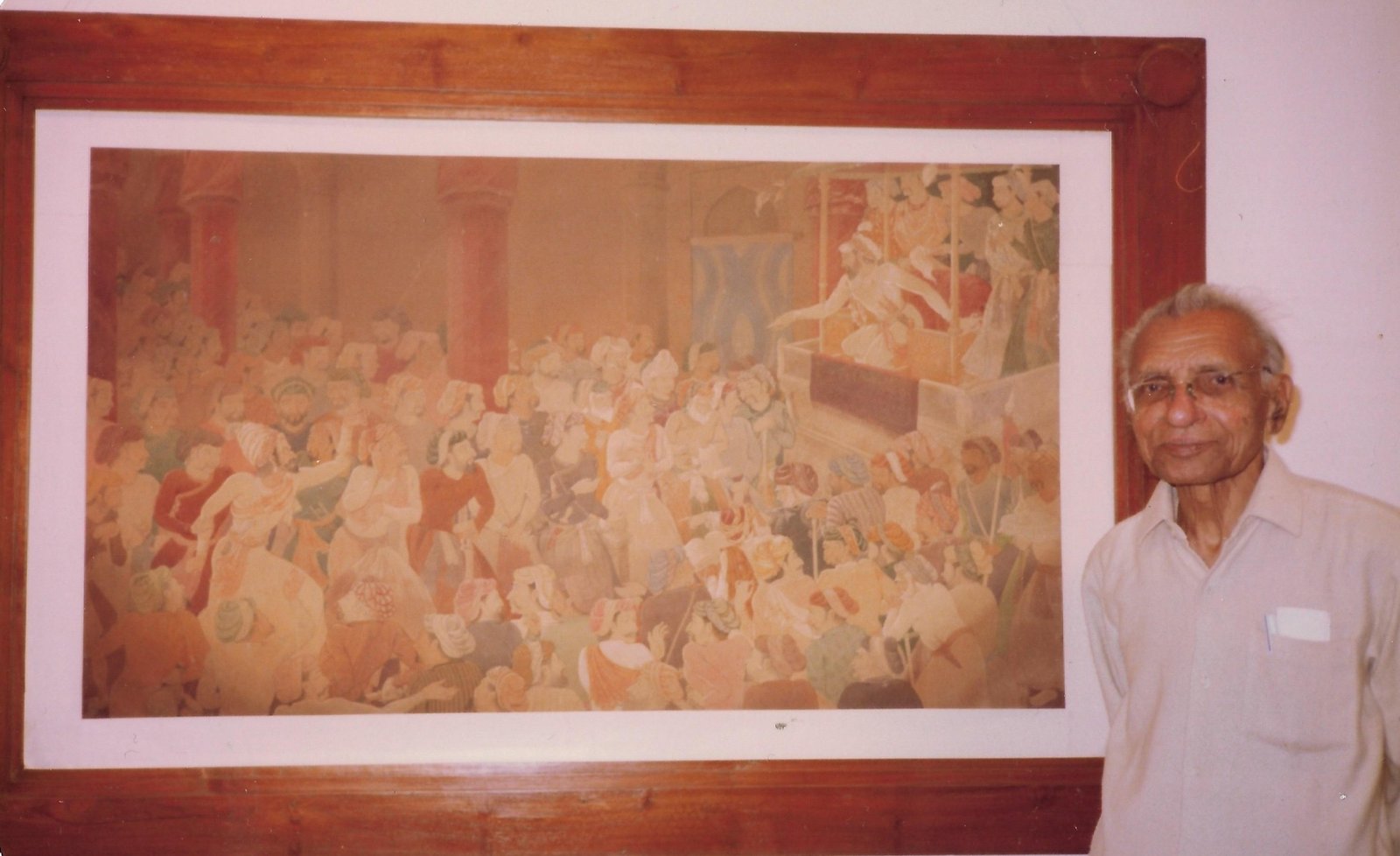
Shivaji in the court of Aurangzeb
Wash Painting · Collection of Prof. Sukhvir Sanghal
The Artist as Educator
In 1938, Prof. Sukhvir Sanghal founded an independent institution for Fine Arts in Allahabad (now Prayagraj), initially known as the Allahabad School of Art. Conceived as a centre for artistic excellence and cultural education, the institution reflected his belief that art should be deeply connected to India's rich creative and intellectual traditions.
During the Second World War, Prof. Sanghal continued to expand the influence of the Allahabad School of Arts as a centre of artistic education and cultural exchange. In October 1944, he organised the Forces Art Exhibition, bringing together artists serving with Allied military forces stationed in India. Archival records from the period reveal his efforts to foster dialogue between Indian and Western artistic traditions and to introduce foreign artists to Indian techniques and aesthetics.
The school later gained formal recognition and was registered under the name Kala Bharti Parishad following discussions with distinguished cultural and national figures, including Dr. Rajendra Prasad, Rai Krishan Das, and Mahadevi Verma. Under Sanghal's leadership, Kala Bharti developed into a vibrant centre for learning, offering training in Indian painting, sculpture, music and classical dance forms such as Bharatanatyam, Manipuri and Kathak, alongside modern artistic disciplines.
Serving as its Director from 1938 to 1964, Prof. Sanghal dedicated himself to nurturing artistic talent and promoting a deeper appreciation of Indian culture through education. His reputation as an artist and teacher extended well beyond the institution, and among his notable students were two future Prime Ministers of India—Indira Gandhi and Vishwanath Pratap Singh—both of whom received art instruction under his guidance during their formative years.
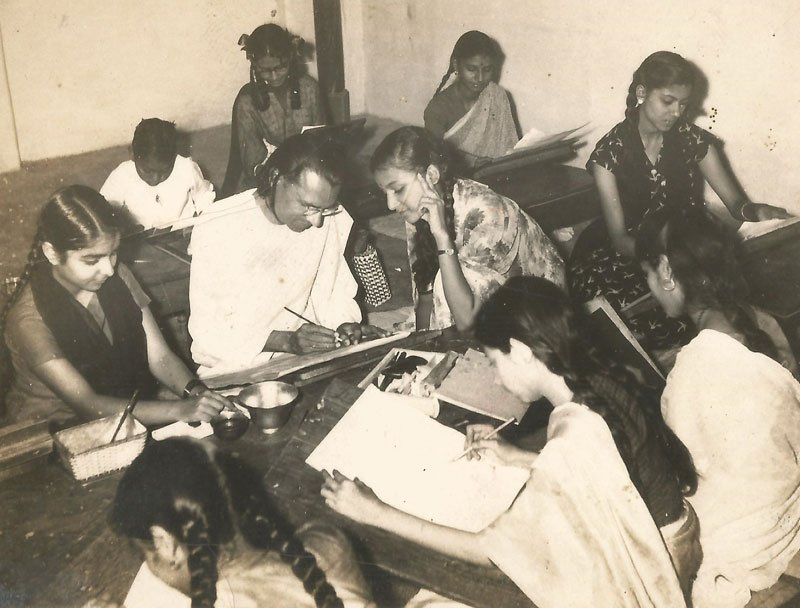
Sukhvir Sanghal teaching art at his Kala Bharti institute.
“Art, for Sanghal, was not a process of depiction, but a journey toward consciousness.”
A Meeting Pt. Jawaharlal Nehru
On the morning of Holi in 1942, Prof. Sanghal was invited to Anand Bhawan by Pandit Jawaharlal Nehru to design the wedding invitation for his daughter, Indira Gandhi. Firm in his artistic convictions, Sanghal proposed that the invitation be created in an authentically Indian style rather than following prevailing Western conventions. What began as a discussion about design soon evolved into a deeper conversation about the nature of art, culture and India's artistic identity. Impressed by Sanghal's insights and understanding of Indian aesthetics, Nehru encouraged him to record his ideas and artistic philosophy in writing. That conversation became the inspiration for what would later develop into Evolution of Art and Artist.
Art as Philosophy
Over the next twelve years, Prof. Sanghal devoted himself to researching and writing the manuscript. Drawing upon Indian philosophy, aesthetics, psychology, history and his own artistic experiences, he examined the evolution of art as a reflection of human consciousness and cultural development. The resulting work extended far beyond conventional art history, presenting a comprehensive exploration of creativity, artistic expression and the role of the artist in society.
The Bengal School of Art Connection
A few days before the passing of Abanindranath Tagore in Kolkata in 1951, Prof. Sukhvir Sanghal had the opportunity to meet the great master. Years later, before the passing of his mentor A.K. Haldar in Lucknow in 1964, he again shared a deeply emotional final interaction with him. Both masters entrusted Prof. Sanghal with the same message: "It is in your hands to keep the Indian art tradition alive." This message became a lifelong inspiration behind his artistic journey and dedication toward Indian aesthetics, wash painting, and the philosophy of rasa. To fulfill the last wishes of his gurus, Prof. Sukhvir Sanghal left behind his flourishing Kala Bharti at Prayagraj and accepted the position of Professor at the Government School of Arts and Crafts, Lucknow, where he later served as Principal. Through his teachings and paintings, he devoted himself to carrying forward the spirit of Indian art and aesthetics.
The Written Legacy
Prof. Sanghal's contribution to art education extended beyond the classroom. He formulated the Fine Arts curriculum for Kanpur University and later published Bhartiya Chitrakala Paddhati in 1985, a significant work that presented his understanding of Indian art, aesthetics and artistic practice in Hindi. The publication remains an important contribution to art education and scholarship.
Prof. Sanghal devoted over twelve years to writing Evolution of Art and Artist in three volumes, an ambitious study examining the philosophical foundations of artistic creation and human creativity.
A Landmark Solo Exhibition
Prof. Sukhvir Sanghal devoted most of his life to artistic creation, teaching and research rather than exhibiting his work. He rarely displayed his paintings, preferring to focus on the pursuit of artistic and philosophical exploration instead of public recognition. For this reason, his solo exhibition in 1992 at Lalit Kala Akademi, New Delhi became a particularly significant milestone in his career.
The exhibition received widespread appreciation and attracted the attention of prominent cultural and public figures. Among its distinguished visitors were Congress President Sonia Gandhi and former Speaker of the Lok Sabha Shivraj Patil, whose presence reflected the growing recognition of Prof. Sanghal's contribution to Indian art and culture.

Sukhvir Sanghal with Congress President Sonia Gandhi during his solo art exhibition in 1992 at Lalit Kala Akadmei, New Delhi.
Recognition & Influence
Throughout his career, Prof. Sukhvir Sanghal earned the respect of artists, scholars, educators and cultural leaders for his unique contribution to Indian art. His paintings were admired not only for their technical mastery but also for their philosophical depth, emotional resonance and commitment to Indian aesthetic traditions.
His influence extended beyond the studio and classroom. As an educator, institution builder and author, he played an important role in shaping discussions around art education and the preservation of India's artistic heritage. Through Kala Bharti, his teaching at the Lucknow School of Arts, and his writings on Indian aesthetics, he inspired generations of students and artists to engage more deeply with the cultural and philosophical foundations of art.
Prof. Sanghal's artistic and intellectual contributions brought him into contact with some of the most prominent figures of his time, including Pandit Jawaharlal Nehru, Indira Gandhi and Vishwanath Pratap Singh. His association with these national leaders reflected the regard in which his artistic vision and cultural insights were held.
Today, his work continues to be appreciated by collectors, researchers, institutions and art enthusiasts who recognize his role in advancing the legacy of Indian wash painting and enriching the broader narrative of modern Indian art.
A Legacy Rediscovered
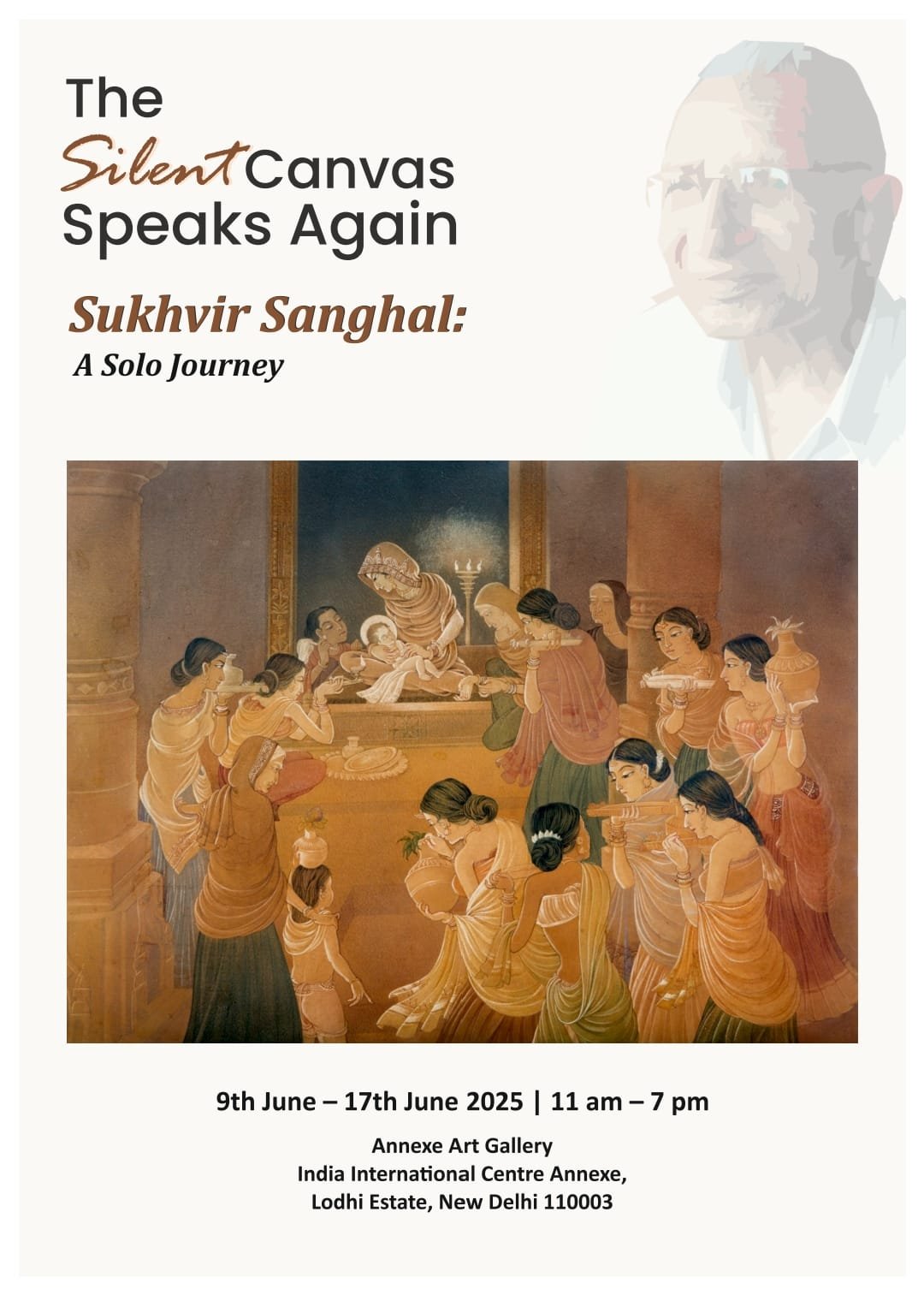
Through exhibitions, publications and archival initiatives, Prof. Sanghal's work continues to find new audiences. His contribution to Indian art is increasingly recognised by collectors, researchers and institutions.